Brown-eared Bulbul (Hypsipetes amaurotis) – Wildlife of Japan
Introduction
The Brown-eared Bulbul is one of the most familiar birds in Japan. It is commonly seen in parks, gardens, farmland edges, and open woodland, and it adapts well to human-dominated landscapes. Its wide diet and flexible behavior allow it to thrive in both natural and urban environments.
Appearance
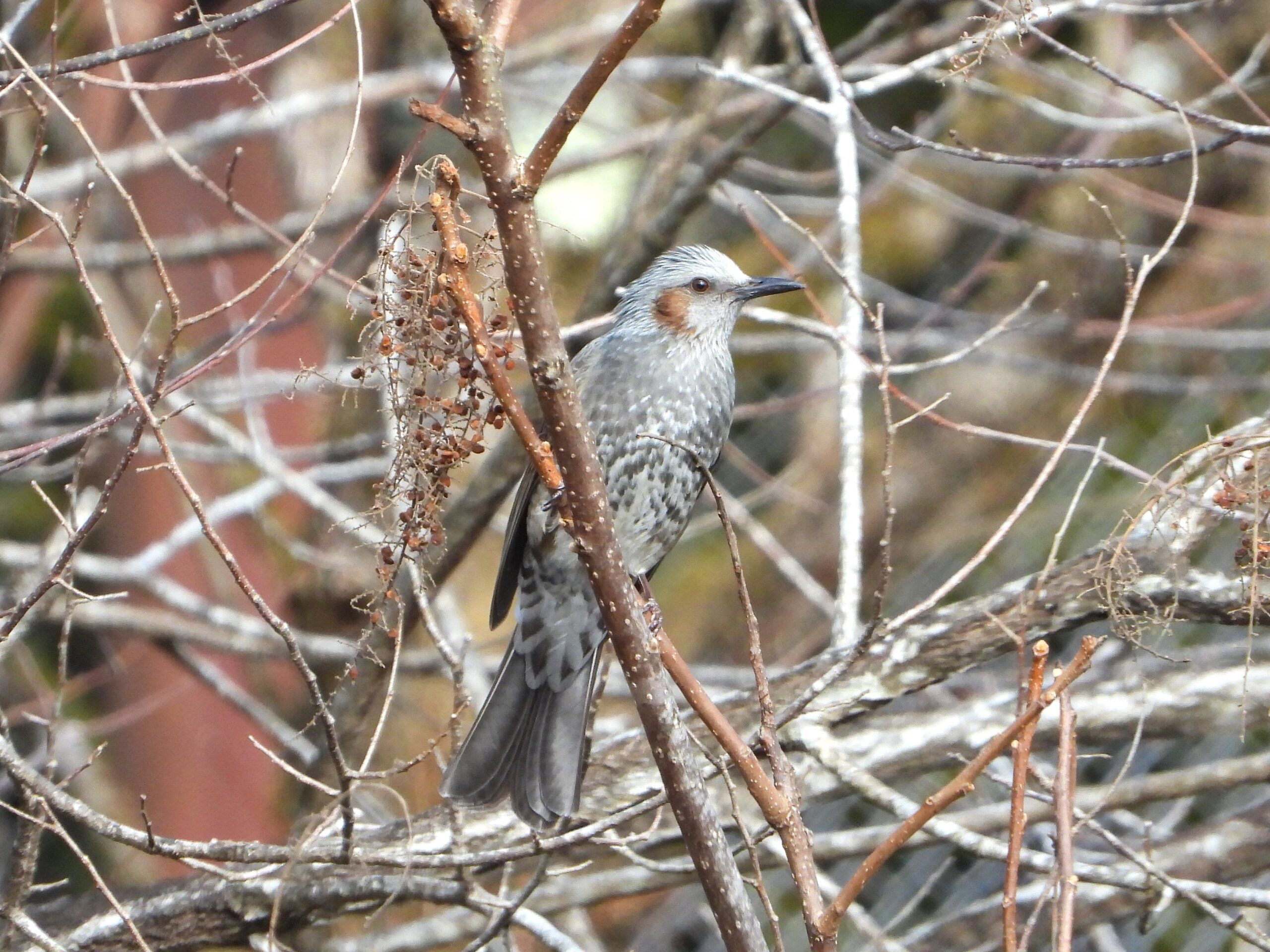
The Brown-eared Bulbul is a medium-sized bird with a mostly gray body and slightly brownish wings and tail. The most distinctive feature is the reddish-brown patch of feathers behind the eye, known as the ear coverts. Males and females look very similar in the field, and visual sexing is generally difficult due to individual and regional variation. Total length ranges from approximately 249 to 290 mm.
Habitat & Distribution
In Japan, the Brown-eared Bulbul inhabits open woodland across a wide range of environments, including rural farmland, suburban areas, and city green spaces. It occurs from lowland areas up into mountainous regions. Several subspecies are recognized in Japan, although subspecies boundaries have been discussed and are not always clearly defined.
Behavior
Outside the breeding season, Brown-eared Bulbuls are often seen in flocks. Some populations undertake seasonal movements, and flocks may travel considerable distances, occasionally crossing bays and straits during migration. Their loud calls and active movement make them easy to notice even in dense vegetation.
Diet
The Brown-eared Bulbul has a highly flexible diet. It feeds on fruits, nectar, petals, leaves, and young shoots, as well as animal matter such as insects, spiders, land snails, and occasionally small reptiles. In spring and summer, animal prey becomes more important and is frequently fed to nestlings. In winter, the species may visit agricultural fields and gardens, sometimes causing damage to leafy vegetables, and it may also take food scraps in urban areas.
Reproduction
Breeding usually occurs from May to September. The species is monogamous, and pairs build a bowl-shaped nest in dense foliage, typically 1 to 15 meters above the ground. A typical clutch consists of about four eggs. Incubation is carried out mainly by the female and lasts approximately 12 to 14 days. Nestlings fledge about ten days after hatching, and parental care may continue for one to two months after fledging.
Conservation
The Brown-eared Bulbul is currently classified as Least Concern on the IUCN Red List. It remains widespread and common throughout much of its range in Japan.
Author’s Impression
The Brown-eared Bulbul is often overlooked because it is so common, but careful observation reveals a remarkably adaptable bird. Watching it switch food sources with the seasons and move confidently between forests, farmland, and city parks highlights how wildlife continues to coexist with people in modern Japan.