Black-headed Gull (Chroicocephalus ridibundus) – Wildlife of Japan
Introduction
The Yurikamome is the Japanese name for the Black-headed Gull, a small gull that becomes especially familiar in Japan during the winter months. It is commonly seen along coasts, rivers, lakes, and urban waterfronts, often very close to people.
Appearance
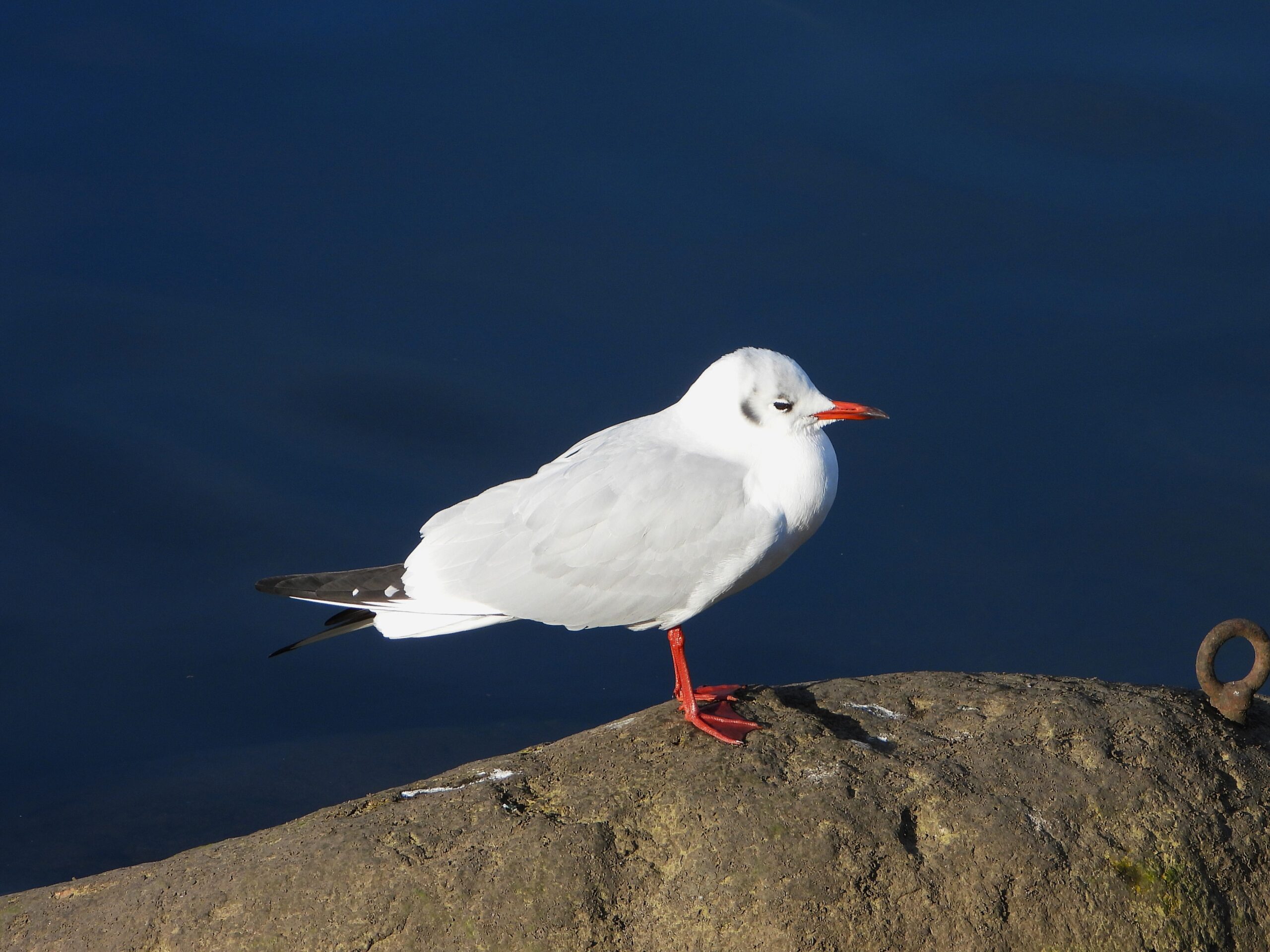
The Black-headed Gull is a small gull, measuring approximately 38–40 cm in length. In winter plumage, which is the form most commonly seen in Japan, the head is white with dark markings around the eye and cheek area. The upperparts are pale gray, while the outer wings show black on the tips. The bill and legs are bright red.
During the breeding season, adults develop a dark brown to black hood on the head, which gives the species its English name.
Habitat & Distribution
The Black-headed Gull breeds across northern Eurasia and migrates south during the non-breeding season. In Japan, it is regarded as a winter visitor and is widely distributed across the country from autumn to spring. Typical habitats include coastal areas, rivers, lakes, estuaries, and harbors.
Where to See in Japan
Because of its adaptability, the Black-headed Gull can be found in many environments. Calm urban rivers, estuaries, waterfront parks, and bays are especially reliable places to observe it. In winter, flocks are often seen resting on the water or drifting slowly near shorelines.
Behavior
This species is highly social and is usually seen in groups, especially during the wintering season. It has adapted well to human-modified environments and is often observed near people. In some areas, individuals may approach humans to take advantage of easily available food.
Diet
The Black-headed Gull is an opportunistic feeder, taking advantage of a wide range of food sources depending on availability. Its flexible diet allows it to survive in both natural and urban environments.
Reproduction
Breeding generally occurs in northern parts of its range, where birds nest colonially in wetlands. In Japan, most individuals observed are wintering birds, and breeding is rarely recorded.
Conservation
Globally, the Black-headed Gull is classified as Least Concern. In Japan, it is not listed as a threatened species and remains a common winter visitor.
Author’s Impression
In Tokyo, many people know the name “Yurikamome” even if they are not birdwatchers. That is largely because the waterfront monorail shares the same name. Because of this, the Black-headed Gull feels closely tied to the image of Tokyo itself. It can be considered one of the birds that best represent the city’s everyday wildlife.