Rock Pigeon (Columba livia) – Wildlife of Japan
Introduction
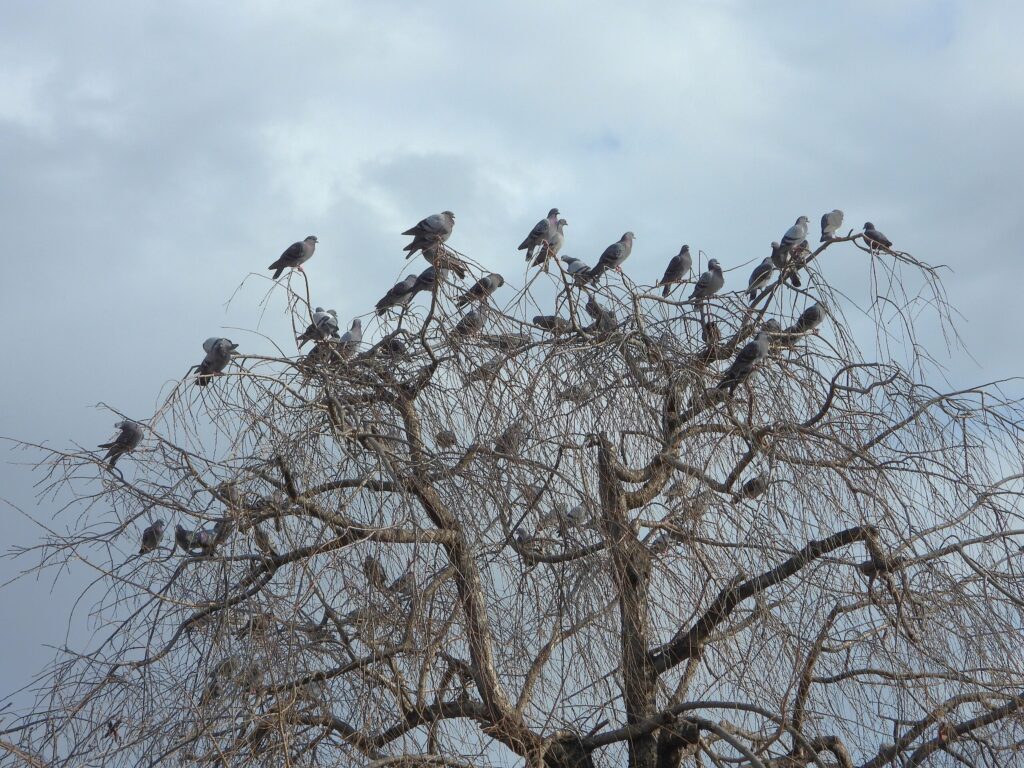
The Rock Pigeon is the familiar pigeon that people commonly see around stations, parks, temples, and riversides across Japan. In Japanese, people widely call it Dobato or Kawarabato.
From a scientific perspective, most pigeons living in Japanese cities are feral pigeons. These birds descend from domesticated pigeons that originated from the wild Rock Dove, and they now maintain self-sustaining populations closely tied to human environments.
Appearance
Rock Pigeons measure approximately 30–35 cm in length, making them medium-sized birds.
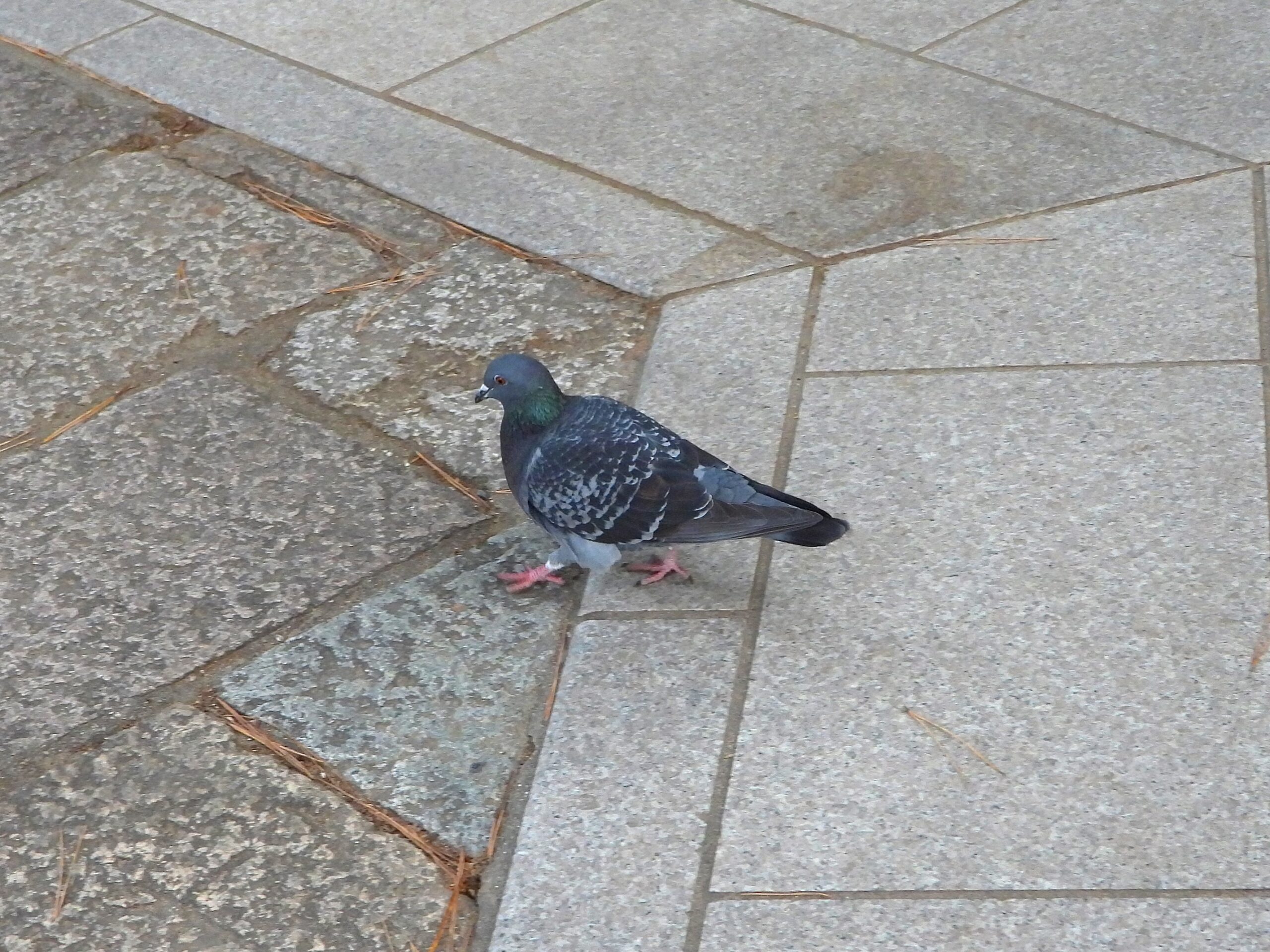
Typically, wild-type individuals show a bluish-gray body with two distinct black wing bars and a broad dark band at the tip of the tail. In addition, the neck often displays an iridescent green to purple sheen.
However, urban populations show wide variation in plumage. For example, individuals may appear dark, pale, brownish, checkered, or almost entirely white. This variation reflects mixed domestic ancestry rather than species-level differences.
Habitat & Distribution
Across Japan, Rock Pigeons occur in almost the entire country, including many islands. They strongly associate with human-modified environments such as cities, residential areas, temple grounds, ports, bridges, and riverbanks.
Originally, the species nested on cliffs and rocky ledges. Today, buildings, balconies, beams, and underpasses function as effective substitutes for these natural nesting sites in urban areas.
Where to See in Japan
Rock Pigeons rely more on urban structure and food availability than on natural habitat quality.
As a result, observers commonly encounter them in the following places:
- Major train stations and surrounding plazas
- Temple and shrine grounds
- Urban parks and riversides
- Bridges, underpasses, and waterfront structures
Nevertheless, local abundance varies depending on feeding pressure and management practices.
Behavior
Rock Pigeons are social birds, and people often observe them in pairs or loose flocks. Throughout the day, they walk and feed on the ground, while they rest on elevated structures such as ledges and beams.
During courtship, males perform bowing displays, inflate the neck, circle females, and vocalize repeatedly. Moreover, pairs often maintain long-term bonds and reuse the same nesting sites over multiple breeding attempts.
Diet
Rock Pigeons primarily consume seeds and grains as their natural diet. In urban environments, however, they also take advantage of food provided intentionally or unintentionally by humans.
Because stable food availability supports high population densities, many public spaces discourage feeding.
Reproduction
When conditions are favorable, Rock Pigeons breed throughout the year.
- Typically, a clutch contains two eggs
- Incubation lasts approximately 17–19 days
- Nestlings remain in the nest for about 25–32 days
Importantly, both parents incubate the eggs and care for the chicks. They feed the young with crop milk, a nutrient-rich secretion produced by adult pigeons.
Conservation
Globally, Columba livia is classified as Least Concern.
In Japan, people do not treat Rock Pigeons as native wildlife in a strict sense. Instead, discussions focus on coexistence issues such as sanitation, building damage, and population management rather than species protection.
Author’s Impression
Rock Pigeons appear even in heavily urbanized areas, including city parks and station plazas. Their constant presence clearly shows how closely this species has adapted to human-made environments.